
Change Fatigue Is Real. Here Is What Leaders Are Missing About It.
Tired teams are often read as resistant ones. Research points to a different cause: the combined volume of change, how earlier changes were handled, and how work is designed. All three are decisions leaders can revisit.

Many leaders reach a point where the organisation looks tired and cannot say exactly why. Several initiatives have launched over the past two years, each with a sound business case and a careful announcement. Now deadlines slip, meetings are quieter, and the people who used to raise ideas have stopped raising them. The usual reading is resistance, so the usual response is a firmer timeline and a stronger message. That reading is often wrong, and the pattern behind it is what researchers call change fatigue.
This blog sets out what the research says about the condition, why leaders tend to see everything except its cause, and what can be done at the level of the organisation rather than the individual.
What is change fatigue, and how is it different from burnout?
Change fatigue is the weariness that builds when people are asked to absorb more change than they believe they can handle. It overlaps with burnout but is not the same thing, because its trigger is the volume and pace of change, not workload in general.
The concept has been studied formally. In 2011, Jeremy Bernerth, H. Jack Walker and Stanley Harris published a paper in Work & Stress that developed a six-item scale to measure it. Their data came from change consultants and from a manufacturing organisation in the United States that had gone through a number of changes over three years. The results showed that the condition was positively associated with exhaustion. Exhaustion, in turn, was negatively related to organisational commitment and positively related to intentions to leave.
Those findings give the condition a useful shape. It is not a mood or a weak attitude. It is a measurable state with consequences for commitment and retention, and it arises from an accumulation of changes rather than from any single one.
Is it fatigue or resistance?
Resistance is a response to a specific change that a person doubts or disagrees with. Fatigue is a response to the total amount of change, and it can appear in people who support every individual initiative. The two look alike from the outside, which is why they are so often confused.
Both produce slow replies, thin participation, missed deadlines and polite compliance. The difference is in the cause, and the cause decides the remedy. If a leader treats fatigue as resistance, the instinct is to persuade: add another town hall, sharpen the case, repeat the message. For someone who already agrees with the case and has no capacity left, this adds one more demand to a full day.
A simple test helps. Listen for the form of the objection. "I do not think this is the right approach" points to resistance about the content of a change. "I agree with this, I just cannot take on another thing" points to fatigue. The second sentence is a statement about load, not about the merits of the plan.
Many organisations have both problems at once, and the two can feed each other. Still, separating them matters, because persuasion works on resistance and does very little for exhaustion.
Why do leaders miss it?
Leaders miss it because change is planned and tracked one initiative at a time, while employees experience all of them together. In many organisations nobody is accountable for the total, so the combined load is invisible at the level where decisions are made.
Several patterns contribute.
Each sponsor sees one programme. A leader who sponsors a system rollout sees the rollout. A different leader sponsors a restructure, another sponsors a culture programme, and a fourth sponsors a new performance process. Each dashboard looks reasonable. The person at the centre of all four, often a middle manager or a frontline team, is not on any dashboard.
Volume is not the only variable. In a 2006 study in the Journal of Applied Psychology, Alannah Rafferty and Mark Griffin separated three perceptions of change: how frequent it is, how well it is planned, and how far it transforms the workplace. They found that these perceptions were related to each other but showed different relationships with employee outcomes. Their discussion stresses the importance of considering how individuals subjectively experience change. A leader who counts initiatives is measuring one thing. The employee is experiencing several.
Reporting favours activity. Status reports tend to count workshops held, communications sent and milestones met. They rarely ask what has become harder for the people doing the work. A programme can be on schedule while the team carrying it is running out of room.
The people who feel it first are not the people who decide. Implementation lands on middle managers and frontline employees, who carry new work on top of the existing job. They are also the group least likely to tell a senior leader that the pace is too high, especially if previous feedback seemed to go nowhere.
None of this is a failure of intelligence or intent. It follows from how change is usually organised. The result is that leaders can be diligent about every initiative and still be unaware of what the whole portfolio is doing to the people at the receiving end.
Does the history of past change affect how new change is received?
Yes. Research suggests that the way employees remember an organisation's earlier changes shapes how they appraise the next one. A new initiative does not arrive on a blank slate.
In a 2017 paper in Human Resource Management, Alannah Rafferty and Simon Restubog studied 252 employees at a manufacturing organisation in the Philippines that was about to undergo a restructuring. They found that a poor perceived change history was negatively associated with seeing the new change as a challenge, and positively associated with seeing it as a threat or a harm. Those appraisals were linked, through a sense that the organisation had broken its promises, to intentions to leave and ultimately to voluntary turnover.
The practical implication is easy to overlook. Initiatives that were launched with energy and then quietly dropped teach people something. They learn that a new programme may not last, and that waiting it out is a reasonable strategy. The cost of an unfinished change does not stay with that change. It is paid by the next one, and by whoever has to ask the same people for effort again.
Is change fatigue a resilience problem or a design problem?
It is mostly a design problem. Resilience training and wellbeing support can help individuals cope, but if the cause is the amount, overlap and sequencing of change, the fix sits in how the organisation plans and resources that change.
Treating the condition as a matter of individual resilience carries a quiet assumption: that the load is fixed and the person should adapt to it. In practice the load is a set of decisions made by leaders, and decisions can be revisited. Several design features commonly sit behind the problem:
- Initiatives overlap and draw on the same small group of capable people.
- Existing targets stay in place when new work is added, so change is additive and nothing is removed.
- No one owns the trade-offs between competing initiatives, so conflicts go unresolved or escalate slowly.
- Roles and decision rights are unclear after a change, which leaves people unsure who can decide what.
- There is no view of how much change a given team can absorb alongside its regular work.
These are questions of organisational design: how roles are structured, where decisions sit, and whether the operating model can take on new work without overloading the same people each time. Changing them does more to reduce the strain than asking people to be more adaptable.
What does change fatigue cost an organisation?
The cost shows up first in exhaustion and then in commitment and retention. The Bernerth study linked the condition to exhaustion, and exhaustion to lower commitment and stronger intentions to leave. There are quieter costs as well, though the research on them is less direct.
One is the loss of discretionary contribution. People who are worn down tend to do what is asked and stop offering ideas, flagging risks or questioning assumptions. The organisation continues to function, but it loses information it needs. Another is the difference between compliance and ownership. A change adopted by tired people is often followed on paper and abandoned in practice, which brings the pattern back to change history and the next initiative.
A note on the evidence is worth making. The Bernerth findings describe associations measured at a point in time. They do not prove the order of events, and a single organisation is a limited sample. The direction they point in is consistent with other research on change and strain, but leaders should treat the numbers as a prompt to check their own organisation, not as a forecast.
How can leaders spot it early?
The earliest signs are usually behavioural and they appear unevenly across the organisation. Teams that carry the most change tend to show them first, so looking by team is more informative than looking at an average.
These are worth checking for:
- Ideas and questions in meetings become less frequent.
- Lower-priority initiatives slip first, while urgent work is still delivered.
- The same few people are attached to several programmes at once.
- Managers describe change as "another one" when it is announced.
- Attendance at optional sessions declines.
- People ask when things will settle, or ask which initiative to treat as the priority.
No single item proves anything, and some of these have ordinary explanations. Two or three together in the same team suggest a problem with load.
Direct questions work better than surveys alone. Ask team leaders how many changes their people are working on at the moment, which of them would be dropped if they had to drop one, and what has become harder to do in the past quarter. The answers are often specific, and the gap between what leaders think the load is and what teams report is itself useful information.
What should leaders do differently?
Leaders should manage the total load of change as a single portfolio with a finite capacity. The aim is not to stop change but to make its combined weight visible and to make trade-offs deliberately instead of by default.
A practical sequence looks like this:
- Count the total. For each team, list every active change, what it asks of people in time, behaviour and tools, and who is affected. Many organisations have never seen this view, and it can show that a few teams carry a disproportionate share.
- Name an owner for the combined load. Individual sponsors will always advocate for their own programme. Someone needs authority to say that a team cannot take on another initiative this quarter and to resolve conflicts between sponsors.
- Finish or retire before adding. Complete initiatives properly or stop them formally, and tell people that they have stopped. Silence about an abandoned programme leaves its demands in people's heads and adds to the sense that nothing ever ends.
- Adjust targets when work is added. If a new initiative requires effort, something existing needs to be reduced, deferred or removed. Otherwise the change is simply extra.
- Define what stays the same. Purpose, core processes and the main ways of working give people fixed points while other things shift. Leaders can name these deliberately so that change has a stable background.
- Give middle managers room to sequence. Managers see their team's capacity and can often arrange work sensibly if they have the authority and a route to escalate genuine conflicts.
- Model the approach. People watch what leaders do more closely than what they announce. Leading through change involves making decisions with incomplete information and being honest about what is still unknown, and both help people tolerate uncertainty without feeling misled.
None of this requires a large programme. The first step, counting the total, can be done with a spreadsheet and a few conversations, and it usually changes the discussion.
What if change cannot slow down?
If the pace of change is set by the market or by technology, the load needs to be managed more deliberately, because it will not shrink by itself. Adopting AI across functions is a current example: it can alter roles, tools and processes in several places at once, often alongside other programmes already in progress.
In that situation the sequencing questions become sharper. Which changes are essential this year and which can wait? Which teams can take on more and which have no spare room? What can be stopped to make space? Being honest about those trade-offs is more credible than announcing that everything is a priority.
Capability also matters. When people have practice in adapting, for example through clearer communication habits and routines for learning new tools, each new change tends to cost less effort than the last. That helps, but it supports the design work and does not replace it. An organisation that keeps adding change without removing anything will eventually exceed what its people can carry, however well prepared they are.
Where does that leave leaders?
Change fatigue is a signal about the system, not a verdict on the people inside it. The research points to a consistent picture: the total volume of change, the way earlier changes were handled, and the design of work all shape how tired people become and what they do about it.
A useful shift is to stop asking why people are resisting and start asking how much the organisation is asking of them, all at once. That question leads to counting, sequencing, ownership and stopping things, which are decisions that leaders can actually make.


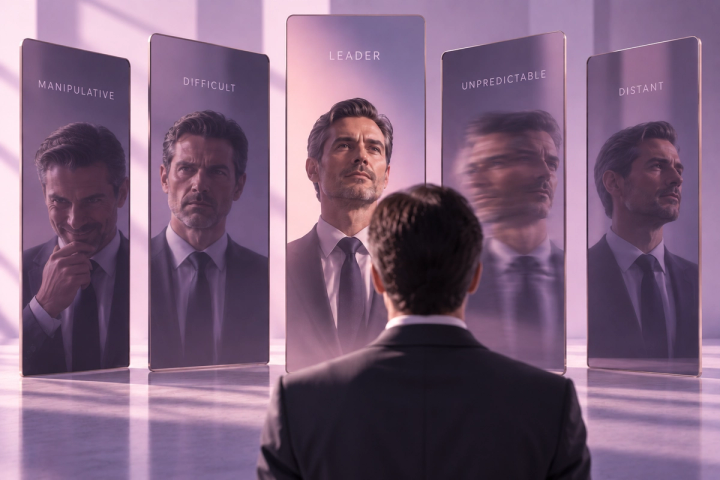
Reading about it is one thing. Designing it is another.
If this one is live in your organisation right now, it’s probably worth a conversation rather than another article.